


Dynamic changes in radiological parameters, immune cells, selected miRNAs, and cytokine levels in peripheral blood of patients with severe COVID‑19
Bukreieva T, Kyryk V, Nikulina V, Svitina H, Vega A, Chybisov O, Shablii Iu, Mankovska O, Lobyntseva G, Nemtinov P, Skrypkina I, and Shablii V.
Biomedical reports, 2023. https://doi.org/10.3892/br.2023.1615
PMCID: PMC10074022
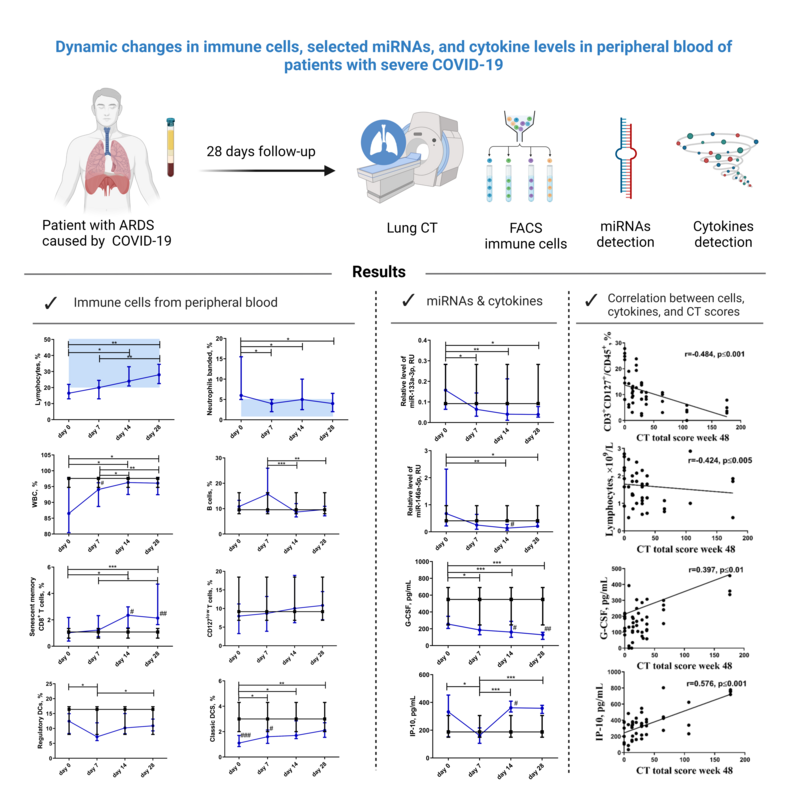
The present study highlights the dynamic changes in different subpopulations of immune cells in patients with severe COVID‑19. The collected data indicated the immunodeficiency state and development of the ‘cytokine storm’ syndrome in patients with COVID‑19 at the beginning of the observation: lymphopenia and leucopenia, increase in the percentage of banded neutrophils, B cells, and CD4+ Treg cells, along with a decrease in the content of PD‑1low T cells, classical, plasmacytoid, and regulatory dendritic cells. The positive response after treatment was observed starting from the 7th day, except for T cells, IL‑6, TNF‑α, and IP‑10 levels, which remained increased again from day 14. The high expression levels of miR‑21‑5p, miR‑221‑3p, miR‑27a‑3p, miR‑146a‑5p, miR‑133a‑3p, and miR‑126‑3p at the beginning of hospitalization may contribute to the disease severity. Based on the results of lung CT score correlation analysis, increased concentrations of G‑CSF, IP‑10, and MIP‑1a, as well as the content of lymphocytes, senescent memory T cells, CD127+ T cells, and CD57+ T cells, had the most prominent impact on post‑COVID‑19 lung injuries in a long‑term period.