


Effects of human placenta cryopreservation on molecular characteristics of placental mesenchymal stromal cells.
Navakauskienė R, Žukauskaitė D, Borutinskaitė VV, Bukreieva T, Skliutė G, Valatkaitė E, Zentelytė A, Piešinienė L, and Shablii V.
Frontiers in bioengineering and biotechnology, 2023. https://doi.org/10.3389/fbioe.2023.1140781
PMCID: PMC10133466
Cryopreservation of placenta tissue for long-term storage provides the opportunity in the future to isolate mesenchymal stromal cells that could be used for cell therapy and regenerative medicine. Despite being widely used, the established cryopreservation protocols for freezing and thawing still raise concerns about their impact on molecular characteristics. In our study, we compared the characteristics of human placental mesenchymal stromal cells (hPMSCs) isolated from fresh (native) and cryopreserved (cryo) placenta tissue. Our study demonstrates that placental tissue can be cryopreserved for long-term storage with the possibility of isolating mesenchymal stromal cells that retain characteristics suitable for therapeutic use.
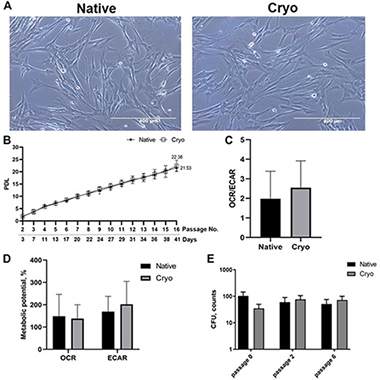
Effects of human placenta cryopreservation on molecular characteristics of placental mesenchymal stromal cells.

Improved pregnancy outcomes in a mouse model confirmed that isolated placental cells both from native and cryo tissue have a positive effect on the restoration of the reproductive system. Still, the native hPMSCs possess better capacity (up to 66%) than cryo hPMSCs (up to 33%) to restore fertility in mice with premature ovarian failure.
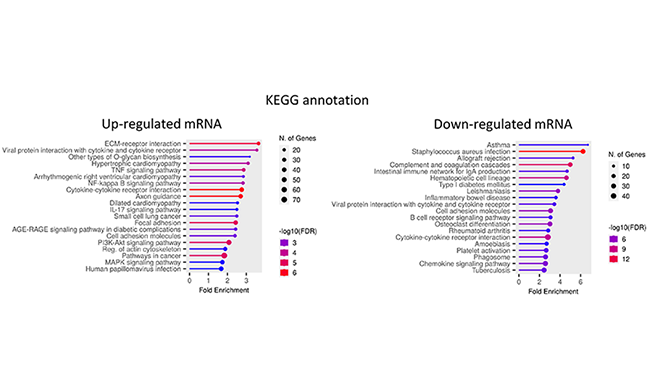
GO KEGG annotation revealed that inflammatory-associated genes involved in viral protein response, TNF, NF-kappa B, AGE-RAGE, cytokine–cytokine receptor, and IL-17 signaling pathways were upregulated in cryo hPMSCs compared to native ones. Furthermore, the ECM–receptor interaction was upregulated in KEGG annotation enrichment. Downregulated enriched categories analyzed by KEGG included genes associated with complement and coagulation cascades, Staphylococcus infection, leishmaniasis, and hematopoietic cell lineages.
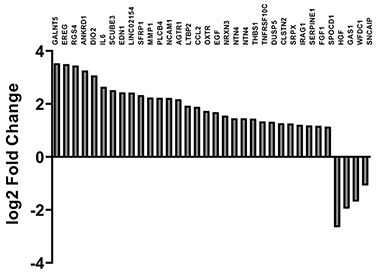
Transcriptome analysis defined the upregulation of early-senescence state-associated and pro-inflammatory growth factors genes in hPMSCs after cryopreservation Thus, all these data can suggest altered immunomodulating properties of Cryo cells.